

The surge of artificial intelligence in healthcare is reshaping how clinicians manage documentation, communication, and diagnostics. One standout tool making waves is ChatGPT, a powerful language model capable of generating natural responses, summaries, and structured medical content. But as healthcare providers look to streamline operations, a central concern lingers: is ChatGPT HIPAA compliant?
With platforms like bastiongpt.com offering solutions tailored for medical environments, the conversation around safety, privacy, and compliance is growing louder. Healthcare professionals, IT teams, and software developers are weighing the potential benefits against regulatory obligations. The stakes are high. A single misstep in data handling could lead to serious breaches and penalties. So, what needs to be considered before using AI like ChatGPT in healthcare systems?
HIPAA’s Relevance in Modern AI Deployments

The Health Insurance Portability and Accountability Act (HIPAA) sets clear boundaries on how patient data can be accessed, stored, and shared. For any AI integration into healthcare workflows, these rules aren’t optional. They’re mandatory.
HIPAA covers everything from encryption protocols to user access control. If a system processes electronic protected health information (ePHI), it must meet strict administrative, technical, and physical safeguards. This includes audit logging, user authentication, data transmission security, and breach response procedures. ChatGPT, in its standard form, does not offer these out-of-the-box.
Healthcare developers must ensure that any AI system plugged into their workflow either complies with HIPAA requirements natively or is wrapped in additional security layers that enforce compliance. This is especially critical when using third-party APIs, where data may be routed through external servers.
The Risks of Standard AI Models in Healthcare
Out-of-the-box generative AI tools like ChatGPT, when accessed through open platforms, are typically not HIPAA compliant. These models do not come with signed Business Associate Agreements (BAAs), which are required for any vendor handling ePHI. Additionally, standard versions may log user prompts and responses to improve the model, which poses serious privacy concerns.
If a healthcare provider inputs patient data into a publicly available ChatGPT interface, there’s a risk that information could be inadvertently stored or accessed outside of secure systems. This risk isn’t theoretical. In regulated industries, even temporary exposure or unsecured logging constitutes a violation.
Beyond compliance, there’s the issue of accuracy. AI models trained on broad datasets may generate plausible but incorrect medical outputs. Without proper validation, these errors can introduce clinical risks. Developers must put guardrails in place to ensure AI recommendations are always subject to human oversight and never used as standalone diagnostics.
Building HIPAA-Compliant AI Workflows
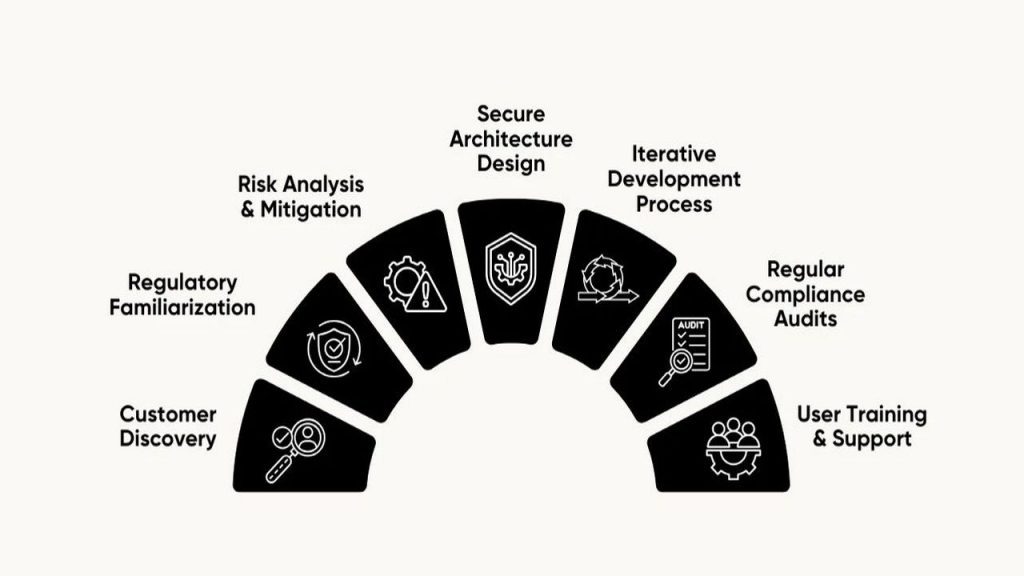
It is possible to create AI-powered healthcare solutions that meet HIPAA standards, but it requires intentional design. The first step is choosing a vendor or model that allows secure deployment. Self-hosted or enterprise-tier AI models can be containerized in secure cloud environments with dedicated control over data access and storage.
Next, the system architecture must include encryption for data in transit and at rest. Role-based access controls, user logging, and multi-factor authentication are equally critical. Developers also need to ensure that any AI outputs are reviewed and approved by authorized personnel before being used in clinical settings or stored in patient records.
Some healthcare-focused vendors offer frameworks where ChatGPT or similar models are deployed in controlled environments. These platforms can be modified to exclude learning from user data, support on-premises deployment, and sign BAAs, helping bridge the gap between innovation and regulation.
ChatGPT Use Cases That Can Avoid ePHI Exposure

While direct integration of ChatGPT into systems processing patient records carries risk, there are valid use cases that do not require handling ePHI. These include clinical note summarization using anonymized data, provider-to-provider communication templates, patient education material generation, and administrative automation.
For instance, AI can assist in drafting prior authorization letters or patient intake forms without exposing sensitive identifiers. In such scenarios, the tool acts more as a support system than a core processor of protected data.
By using AI in areas where HIPAA restrictions are less stringent, healthcare teams can still benefit from automation and language generation. The key is separating tasks that involve ePHI from those that don’t, and establishing clear boundaries within workflows.
Vendor Selection Matters
Healthcare organizations should be selective about who they partner with. Not every AI vendor is prepared for the complexity of HIPAA compliance. Trustworthy providers will clearly state whether they sign BAAs, what security certifications they hold, and how their platforms handle sensitive data.
Due diligence should include evaluating the vendor’s encryption practices, audit trail capabilities, disaster recovery protocols, and policies for data retention. It’s also important to review their transparency around model updates, data usage, and performance benchmarks.
Companies like BastionGPT have emerged with healthcare-grade AI offerings designed to meet compliance needs. These platforms typically allow secure custom integrations and are structured to prevent data leakage, giving healthcare providers more control and confidence in how AI is used.
Moving Toward Safe and Effective AI Integration
The future of healthcare will likely involve deeper integration of AI. That doesn’t mean compliance standards will loosen. If anything, regulatory scrutiny will increase as these tools become more embedded in clinical decision-making.
Healthcare software developers must strike a balance between adopting cutting-edge tools and upholding regulatory integrity. By prioritizing privacy-by-design, selecting responsible vendors, and limiting AI exposure to non-sensitive tasks when appropriate, teams can make progress without compromising compliance.
The decision to integrate AI should always be paired with a full risk assessment and a clear implementation roadmap. This includes staff training, audit planning, and contingency protocols. Only then can AI like ChatGPT safely support care delivery in a way that enhances outcomes, preserves trust, and protects patient rights.