


For years, the default response to growing order volume was simple: hire more people. The idea that you could scale ecommerce fulfillment without adding headcount seemed reserved for warehouse automation giants with eight-figure CapEx budgets, not Shopify founders shipping 300 orders a day through a regional 3PL. That assumption has shifted. A combination of smarter routing software, tighter integrations between inventory and carrier platforms, and better third-party fulfillment infrastructure has made lean operations achievable at volumes that once required sizable ops teams.
The shift is partly structural and partly cognitive. Once operations teams stop measuring progress by floor headcount, they start asking more useful questions: where are orders getting stuck, how long does a pick cycle actually take, and which carrier routing decisions are eating margin? Platforms like Shipduo have made it practical for ecommerce founders to restructure their fulfillment around throughput rather than labor volume. What follows is a breakdown of how that change actually works.
The Headcount Trap in Fulfillment Operations
The instinct to staff up when volume grows feels reasonable. Busy warehouse floors get busier; more hands should help. But adding pickers and packers often introduces new coordination problems faster than it solves the throughput issue. More people mean more training cycles, more shift overlap, and error rates that compound at scale.
A facility processing 100 orders a day with three fulfillment staff might hit 250 orders with seven staff and find that per-order accuracy has actually dropped. The reason is usually workflow design, not effort. When the picking path hasn’t been optimized, inventory slotting hasn’t been reviewed in a year, or there’s no clear system for exception handling, more workers fill a broken process rather than fix it.
The brands that have moved past this trap share one characteristic: they audited their process before their payroll. They asked what part of the operation a human was uniquely suited to handle, and then asked whether software could take on everything else. That reframe opened up enough capacity to grow without growing the team.
Where Software Removes the Most Manual Work
The clearest wins in fulfillment automation tend to sit in order routing and inventory sync. When an order comes in, a human making decisions about warehouse location, carrier selection, and packing spec adds two to four minutes per order. At 500 orders per day, that’s 15 to 30 hours of decision-making labor that could run on predefined rules in a modern order management system.
Bureau of Labor Statistics data on the transportation and warehousing sector consistently shows labor as the dominant cost category in distribution operations. Automated routing and order management tools move that labor intensity down, not by eliminating jobs, but by redirecting people away from low-value, repetitive decisions.
Inventory syncing is the other frequent win. Brands running across multiple sales channels often have someone whose job partly consists of reconciling inventory counts between platforms. That task disappears when the warehouse management system connects directly to the storefront in real time. The person doesn’t get cut; they get reassigned to work that requires actual judgment.
What a Lean Fulfillment Stack Looks Like in Practice
The word “stack” migrated from software development, but it applies cleanly here. A lean fulfillment stack is the combination of tools that handle order intake, routing, warehousing, packing, carrier selection, and post-ship communication, with each step handing off automatically to the next without a human needing to intervene.
For brands in the 200-to-1,000-orders-per-day range, that stack typically includes a warehouse management system connected directly to the storefront, automated carrier rate shopping, barcode scanning at pack, and returns handling that doesn’t require a dedicated agent per case.
None of this is exotic technology. Most components are available as SaaS subscriptions at a monthly cost well below a part-time hire. The bottleneck is usually integration. When tools don’t communicate with each other, humans fill the gap. Getting the stack properly connected typically takes two to four weeks of configuration, but the reduction in manual handling per order is measurable within the first month.
The Case for 3PL Partnerships When Growing Lean
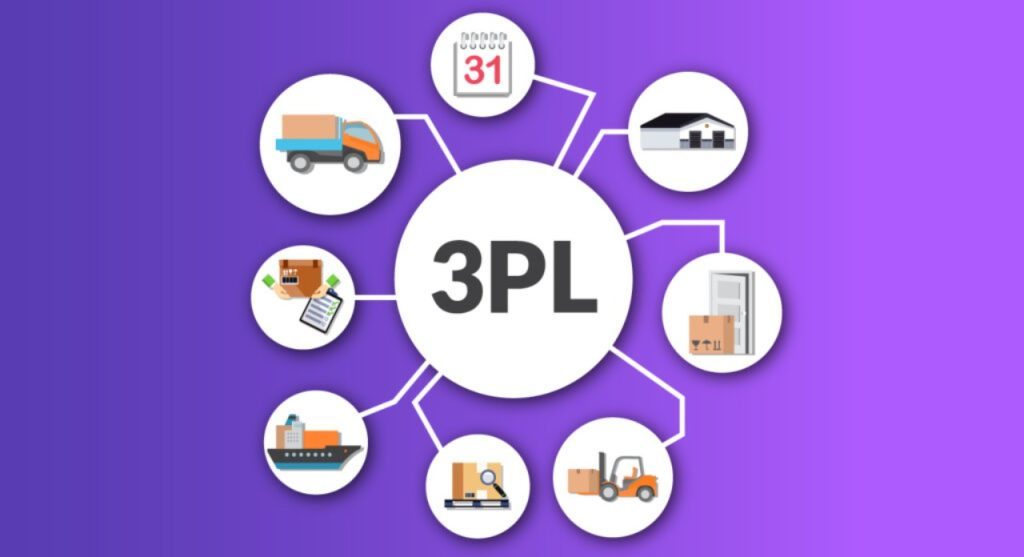
Outsourcing fulfillment to a third-party logistics provider is not the same as giving up control. The distinction matters because some operators hesitate here, worried that handing off their warehouse means losing visibility. Brands that choose 3PLs carefully tend to find the opposite.
A well-matched 3PL brings existing automation infrastructure, established carrier relationships, and experienced labor that would take years to build internally. A brand doing 200 orders per day through a 3PL with automated sortation can operate at a per-order cost that a self-managed facility at that volume typically cannot match. The brand avoids hiring for peak season and doesn’t pay for idle capacity in slow months.
Research published through the Council of Supply Chain Management Professionals on third-party logistics adoption shows the fastest-growing segment is mid-market ecommerce brands, precisely the range where building internal infrastructure is expensive but outsourcing is still operationally simple. The economics get compelling well before a brand is moving significant freight volume.
Metrics That Replace Headcount as the Growth Signal
When headcount is no longer the default growth metric, something has to replace it. The most useful alternatives are cost per order, order cycle time, and error rate per 1,000 orders. These three give a clear picture of operational health without requiring you to watch a floor.
Cost per order is the most actionable. It includes labor, packaging, carrier fees, and returns handling, divided by total order volume. A business that knows its cost-per-order can evaluate whether switching 3PLs, renegotiating a carrier contract, or changing packing spec will pay off. Most brands that don’t track it have no real way to make those calls with any confidence.
Order cycle time has a direct customer experience impact that gets underappreciated in internal ops discussions. Same-day or next-morning processing is increasingly the baseline expectation among online shoppers. Meeting it doesn’t require a larger team; it requires that orders flow through the system without stacking up at any single handoff point. That’s a workflow question, not a hiring question.